Games Technology
UWE Bristol|Games Technology 遊戲科技學士

What You’ll Learn on BSc (Hons) Games Technology
Game Programming Fundamentals
You will build a strong foundation in game programming using industry-standard languages such as C++ and C#. Starting with core programming concepts, you will quickly move on to gameplay mechanics, input handling, game loops, and data structures tailored for real-time applications. Throughout the course, you will write clean, efficient, and well-documented code, learning professional practices such as version control, debugging, and testing so you can contribute confidently to real development teams.
Game Engines and Tools
You will gain deep, practical experience with leading game engines, typically including Unity and Unreal Engine. You will learn how to design scenes, manage assets, script behaviours, and optimise performance for different platforms. Alongside this, you will explore tools development, creating custom editors, level design tools, and build pipelines that streamline production. This combination prepares you to adapt quickly to new engines and workflows used across the games industry.
Graphics, Rendering and Visual Effects
The course introduces you to real-time graphics and rendering techniques that bring games to life. You will study 2D and 3D graphics pipelines, shaders, lighting models, materials, and post-processing effects. By implementing rendering features and experimenting with visual styles, you will understand how artistic vision and technical constraints meet. You will also explore optimisation strategies to maintain high frame rates on a range of hardware, from desktop PCs to consoles and mobile devices.
Artificial Intelligence for Games
You will learn how to design and implement AI systems that create believable and engaging game experiences. Topics typically include pathfinding, decision trees, finite state machines, behaviour trees, and basic machine learning approaches where appropriate. You will apply these techniques to enemies, companions, and non-player characters, focusing on both technical correctness and player experience. By the end, you will be able to prototype and refine AI behaviours that support a wide variety of game genres.
Physics, Animation and Simulation
The course covers the physics principles that underpin realistic movement and interaction in games. You will work with physics engines to handle collisions, rigid bodies, forces, and constraints, and learn when to approximate reality for better gameplay. You will also explore character movement, animation blending, and simple procedural animation techniques. This knowledge helps you create responsive, satisfying controls and believable worlds that react convincingly to player actions.
Networking and Online Play
You will be introduced to the fundamentals of networked and online games, from client-server architectures to latency and synchronisation challenges. Through practical exercises, you will implement basic multiplayer features such as lobbies, matchmaking, and state replication. You will also consider security, scalability, and user experience issues specific to online play. These skills are increasingly important as more games move towards connected and live-service models.
VR, AR and Emerging Technologies
Where available, you will explore virtual reality (VR), augmented reality (AR), and other emerging platforms. You will learn how to design interactions for immersive environments, manage performance constraints, and address comfort and accessibility considerations. Working with specialist headsets and controllers, you will prototype experimental experiences that push beyond traditional screen-based games, preparing you for future developments in interactive media.
Theory, Practice and Project-Based Learning
The course balances solid theoretical grounding with extensive hands-on development. Lectures and seminars give you the mathematical, computational, and design theory needed to understand why techniques work, while labs and workshops focus on applying that knowledge in real engines and tools. Each year, you will complete individual and team-based game projects that challenge you to integrate programming, design, art, and production skills into playable prototypes and polished games.
Team Projects and Portfolio Development
Collaboration is central to the course. You will work in multidisciplinary teams that mirror professional studios, taking on roles such as gameplay programmer, tools engineer, or technical designer. Together, you will plan, build, and iterate on game projects, learning agile workflows, communication skills, and production pipelines. By graduation, you will have a strong portfolio of completed games, prototypes, and technical demos that showcase your abilities to employers and support applications for internships or graduate roles.
Specialist Labs and Industry-Standard Equipment
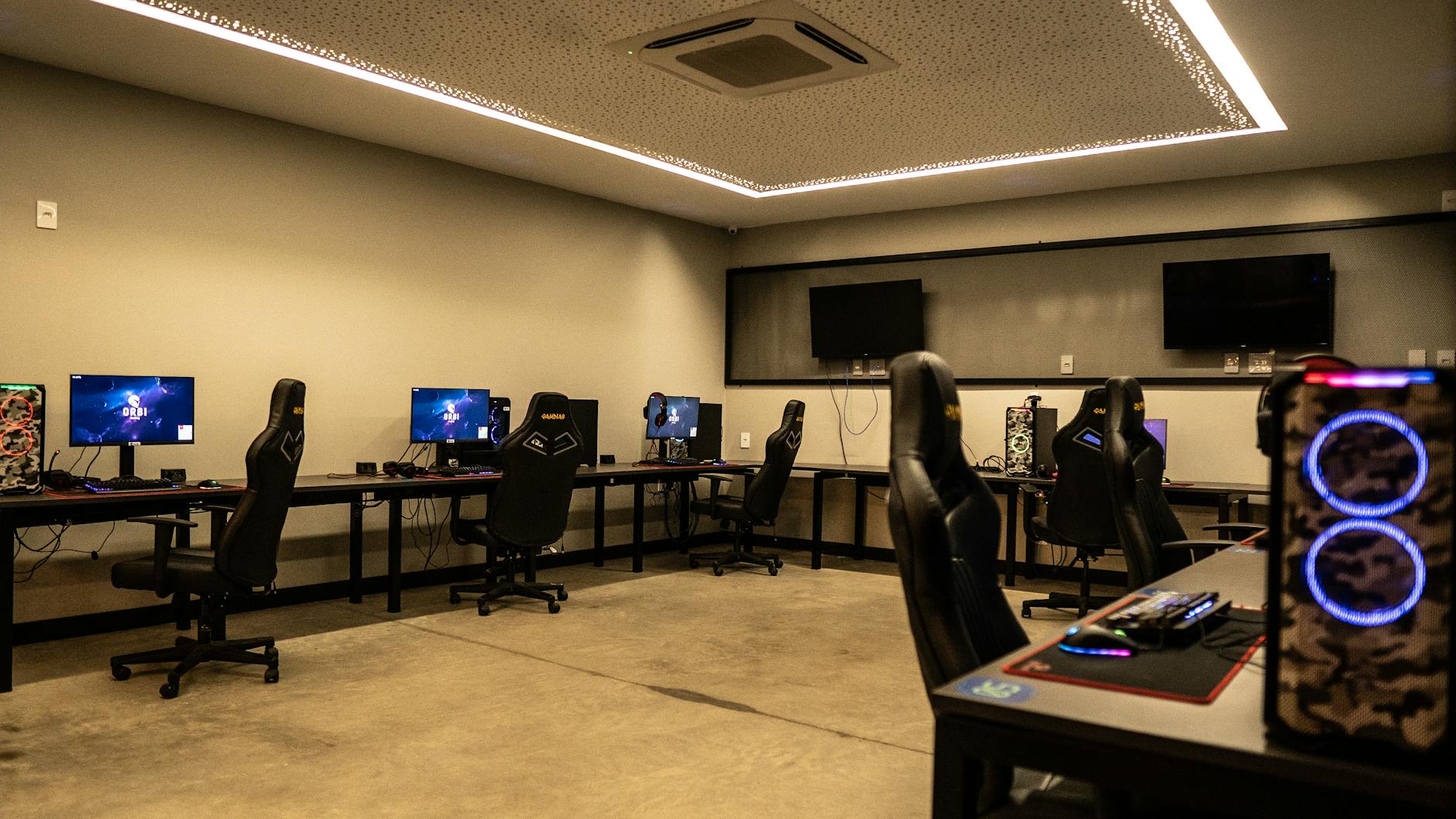
Throughout your studies, you will have access to specialist games labs equipped with high-performance PCs, dual-monitor setups, and current-generation graphics hardware. Depending on the institution, you may also use console development kits, VR and AR headsets, motion controllers, and large-format displays. These facilities are designed to replicate professional environments, giving you the space and tools to experiment, test, and refine your projects to a standard expected in the games industry.

Careers, Industry Links & Graduate Outcomes
The BSc (Hons) Games Technology degree is designed to launch you directly into the games industry and related tech sectors. Graduates typically progress into roles such as gameplay programmer, tools programmer, technical designer, engine programmer and QA engineer, applying strong programming, maths and problem‑solving skills to real production pipelines. You will build a professional portfolio of playable prototypes, tools and technical demos that clearly demonstrate your abilities to employers.
Our graduates work across a wide range of organisations, from agile indie studios and major AAA developers to technology companies, simulation firms and emerging XR start‑ups. Throughout the course you will collaborate on team projects that mirror studio workflows, use industry‑standard engines and version control, and learn how to communicate effectively with designers, artists and producers.
We maintain strong industry partnerships with local and national studios who contribute guest lectures, portfolio reviews and live briefs. Regular game jams and hack‑style events help you experiment, network and learn to deliver under real deadlines. Many students secure placements and internships with partner studios or tech companies, gaining invaluable experience and contacts before graduation.
Industry guests visit campus to share current practices in gameplay engineering, tools development, optimisation and testing, giving you insight into how your skills translate into studio roles. You will receive guidance on CVs, showreels and technical interviews, and our careers team supports you in targeting graduate schemes, junior programmer posts and technical design roles across games and wider software sectors.
Graduate success story: After completing the degree, Maya joined a small indie studio as a junior gameplay programmer, where she rapidly became the go‑to developer for complex character systems. The AI prototype she built for her final‑year project impressed visiting industry mentors, who recommended her to the studio. Within two years she had shipped two commercial titles, spoken at a regional games conference and begun mentoring current students on their own game jam projects.
BSc(Hons) Games Technology Entry & Applications
To join the BSc(Hons) Games Technology at UWE Bristol, applicants are normally expected to have a strong set of Level 3 qualifications (or international equivalent) in relevant subjects, plus evidence of mathematical ability and genuine interest in games development. Typical offers are set at a level that reflects solid academic preparation, but we welcome a range of qualifications and experience, including alternative and non‑traditional routes. The course is studied full time over three years, or four years with an optional sandwich placement year in industry. Entry criteria, grade ranges and any subject‑specific requirements can change, so you should always check the latest details on the official UWE Bristol course page before applying. When you are ready, you can submit your application online through UCAS or directly, following the guidance provided there. Check requirements and start your application today.